Let Water and Nutrients Reach Grass Roots
Core aeration and dethatching services in Bangor, Michigan that reduce compaction and remove excess buildup.
Your lawn in Bangor stops absorbing water when soil particles press together too tightly, and a thick thatch layer above the roots blocks fertilizer and oxygen from reaching grass plants. Kingsmen Lawncare & Services uses core aeration to pull plugs of soil from compacted areas and dethatching equipment to remove the spongy layer that sits between green blades and soil surface.
Aeration reduces soil compaction by creating open channels for water, nutrients, and oxygen to move downward, while dethatching removes excess thatch buildup that prevents those inputs from penetrating the root zone. Both services are recommended for stressed or thinning lawns in Bangor that show signs of poor drainage or weak growth. The work is best performed during peak growing seasons when grass can recover quickly.
If water pools on your lawn or your grass feels spongy underfoot, contact Kingsmen Lawncare & Services to schedule aeration or dethatching in Bangor.
What Happens to the Soil and Thatch
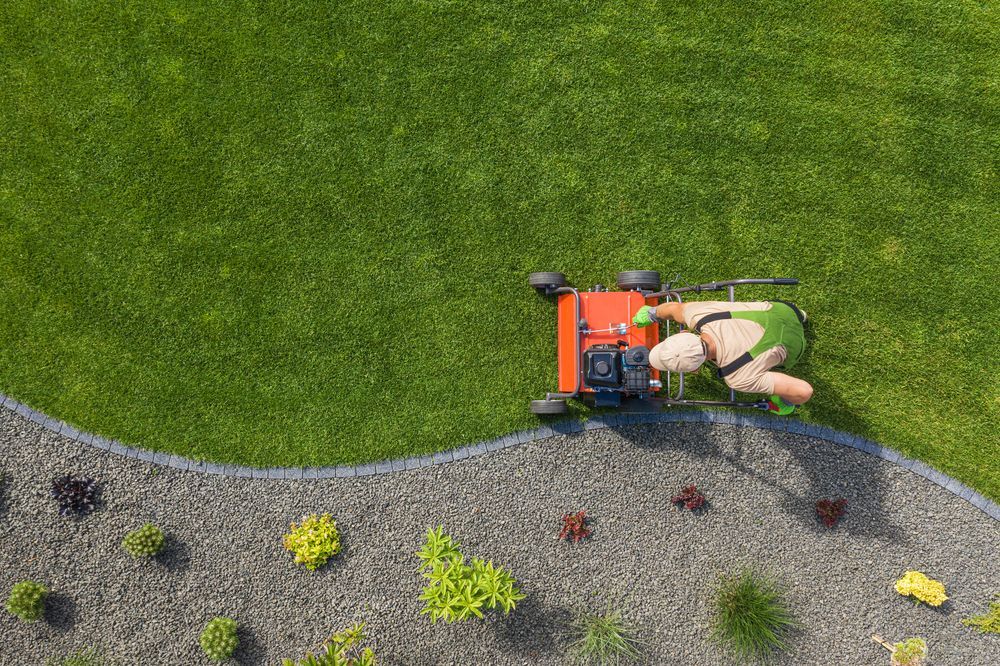
The crew runs a core aerator across your lawn in Bangor that pulls plugs of soil and deposits them on the surface. After aeration, you will see small cylinders of dirt scattered across the turf that break down naturally over the next few weeks. Core aeration to reduce soil compaction opens pathways that improve water, nutrient, and oxygen absorption.
Dethatching uses a power rake with rotating blades that cut through the thatch layer and pull matted organic material to the surface. The crew collects the debris and hauls it away, leaving exposed soil that allows air and moisture to reach grass roots directly.
Both services can be performed separately or together depending on what your lawn needs in Bangor. Aeration addresses compaction below the surface, while dethatching removes buildup above it. Neither service includes seeding or fertilization unless those tasks are added separately. If your lawn is thin, you may need additional treatments after the soil and thatch are corrected.
You might be unsure which service you need
Homeowners in Bangor often ask about the difference between aeration and dethatching, how long recovery takes, and whether both services are necessary.
Compacted soil and thick thatch in Bangor prevent water and nutrients from reaching the root zone, and lawns weaken when inputs cannot penetrate the surface. If your turf is thinning or water is not soaking in, get in touch with Kingsmen Lawncare & Services to schedule aeration or dethatching.